
Beware of Fake Jobs on LinkedIn and Jobstreet: How to Spot and Avoid Scams
Protect Your Personal Information and Finances by Recognizing Common Red Flags in Online Job Offers
The rise of online job platforms like LinkedIn and Jobstreet has made job hunting more accessible than ever—but it has also opened the door to a surge in fake job listings and sophisticated scams. These fraudulent postings can lead to data theft, financial loss, and emotional distress for job seekers. Hereʼs what you need to know to protect yourself.
What Are Fake Job Listings?
Fake job listings are postings that do not correspond to real employment opportunities. Scammers use these ads to collect personal information, steal identities, or even extract money from desperate job seekers. According to recent reports, a significant percentage of job listings on LinkedIn are fraudulent, with some estimates suggesting as many as 60% are fake. This was even confirmed by an article published on Binghamton University about fake job listings especially on LinkedIn.
How do Scammers operate?
Data Mining: Scammers create fake job ads to collect resumes, phone numbers, and emails, which can be used for identity theft or sold on the black market.Phishing Interviews: Some go further by conducting fake interviews and then requesting sensitive information or upfront payments for supposed registration or onboarding fees.
Fake Recruitment Profile:Scammers often impersonate HR managers or recruiters using convincing LinkedIn profiles and company details to appear legitimate.
Payment Requests: After a “successful” interview, victims may be asked to provide bank information or pay for equipment, training, or application processing—money that disappears along with the scammer.
How to Identify Fake Job Listings
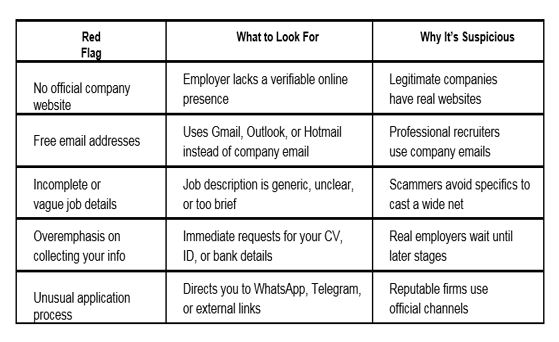
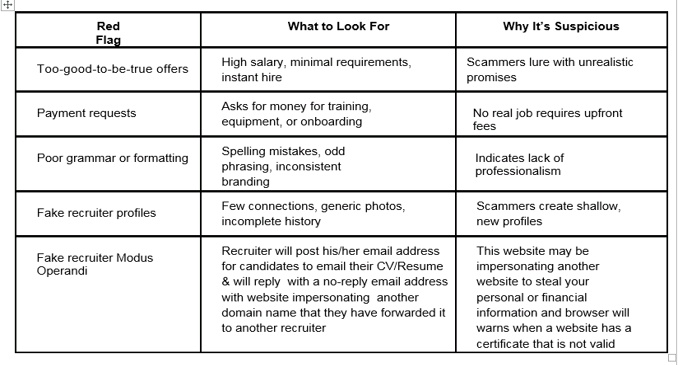
Practical Tips to Protect Yourself
• Verify the company: Search for the employer’s official website and cross-check job openings. Contact the company directly if unsure.• Check recruiter profiles: Review their work history, endorsements, and connections. Be wary of new or incomplete profiles.
• Never pay to apply: Legitimate employers do not ask for money at any stage of recruitment.
• Use scam-detecting tools: Tools like Google Safe Browsing or Scam adviser can help assess the legitimacy of a company’s website.
• Trust your instincts: If something feels off or too good to be true, it probably is. Donʼt share sensitive information until you’re certain the opportunity is real.
• Email acknowledgment: That the recruiter will email job seeker that they are forwarding our application to another recruiter and the email reply using other email domain name which when checked impersonating that domain to steal personal or financial information.
What to Do If You Suspect a Scam
• Report the listing: Use the reporting features on LinkedIn or Jobstreet to flag suspicious job ads.• Alert the company: Notify the real company if their name is being miused.
• Protect your information: If youʼve shared sensitive data, monitor your accounts for unusual activity and consider identity theft protection services.
What is the Impact of Fake Jobs Posted Online on LinkedIn and Jobstreet for Job Applicants?
Fake job postings on platforms like LinkedIn and Jobstreet significantly impact job applicants through wasted time and effort, emotional distress, financial strain, and eroded trust in hiring systems. Here's a breakdown of their effects:1.Wasted Time and Effort:
Applicants invest hours tailoring resumes, writing cover letters, and preparing for interviews for roles that don’t exist. This delays their job search and diverts energy from genuine opportunities.
2.Emotional Toll:
Repeated encounters with fake postings lead to frustration, anxiety, and self-doubt, especially for those urgently needing employment. The constant rejection or discovery of scams undermines confidence in one’s qualifications.
3.Financial and Privacy Risks:
Scammers exploit fake listings to harvest personal data (resumes, ID documents), increasing risks of identity theft. For those recently laid off, prolonged searches due to fake postings exacerbate financial insecurity.
4.Erosion of Trust
Fake postings distort perceptions of job availability, creating a false sense of market demand. Applicants lose faith in platforms like LinkedIn and Jobstreet, damaging their reputations. Companies using such tactics face long-term reputational harm, making it harder to attract talent.
5.Impact on Job Market Dynamics
Inflated job numbers from fake postings mislead policymakers and economists, potentially skewing labor market analyses. This undermines efforts to address genuine hiring challenges.
Platform-Specific Concerns
LinkedIn: Up to 60% of listings may be fake, with scams ranging from data mining to phishing.Jobstreet: Scams target vulnerable job seekers, particularly those seeking part-time work.
Solutions and Mitigations
Platforms and employers must prioritize transparency (e.g., verifying listings) and accountability (penalizing fraudulent postings). Job seekers should verify roles via company websites and avoid sharing sensitive data prematurely.By addressing these issues, platforms can restore trust and ensure a fairer job market.
Stay vigilant, do your research, and trust your gut. Your next job opportunity should bring you security—not risk.
About the Author: Jmaal Bawazir | Freelance Consultant | Cmd Alt Fix U.K.
 Connect with me on LinkedIn: https://www.linkedin.com/in/jmaalbawazir
© 2025 Cmd Alt Fix | All Rights Reserved
hidden
© 2026 | MMXXVI All Rights Reserved. | Cmd Alt Fix | United Kingdom | www.cmdaltfix.uk