
What Does the Future of Hospitality Look Like with Technology and AI?
Reflecting on my early career in hospitality — back in 1990 as part of the pre-opening team at Penang Parkroyal Resort, a 5-star property where together with the team, I lead and managed the deployment and implementation of the hospitality system Maxial (on-premise PMS with availability of licensed system source codes for system enhancements and development of additional new programs and sub-module) running on one platform from ground-up, the very first fully integrated PMS system whereby HIS system (Property Management System and though with limited modules in the 90s) prior the entrance of cloud based Oracle’s OPERA Cloud Property Management System (PMS) & HIS system leverage on cloud technology with enhanced modules and comprehensive multi-platform in late 1990s & early 2000s — it’s incredible to see how far technology has come. From those early days of digitizing operations to today’s AI-driven innovations, the evolution has been nothing short of transformative.
As we step into 2025, the hospitality industry is undergoing a profound transformation, embracing cutting-edge technologies like artificial intelligence (AI), the Internet of Things (IoT), and advanced data analytics to redefine guest experiences and operational excellence. This shift is not just about adopting new tools; it’s about fundamentally reimagining how hospitality can delight guests and empower professionals. These technologies are reshaping hotel operations, enhancing guest experiences, and optimizing revenue management.
Pros & Cons of Cloud-Based Systems
Pros
Scalability• Cloud systems allow businesses to scale resources up or down easily based on demand, avoiding over-provisioning or underutilization.
Cost Efficiency
• Reduces the need for upfront hardware investment and ongoing maintenance, as you pay only for what you use.
Accessibility
• Enables access to data and applications from anywhere with an internet connection, supporting remote work and global collaboration.
Disaster Recovery & Backup
• Most cloud providers offer robust backup and disaster recovery solutions, minimizing data loss risks.
Automatic Updates
• Cloud services are regularly updated by providers, ensuring users have access to the latest features and security patches without manual intervention.
Collaboration
• Multiple users can work on the same documents or projects in real-time, improving productivity and teamwork.
Cons
• Requires a stable internet connection; outages or slow speeds can disrupt access to critical systems and data. Even if RAID 0, RAID 1, RAID 5, RAID 6 and RAID 10 were implemented at data center, if the internet connect outages happens, such as long haul optical submarine cable by the Telco’s to name a few such as Asia Pacific Gateway (APG), Asia-America Gateway (AAG), Asia Submarine Cable Express(ASE), Asia Africa Europe-1(AAE1) and others, it serves no purpose and disrupt the hotels/resorts access which need to goes back to manual.
Security & Privacy Concerns
• Storing sensitive data offsite can raise concerns about data breaches, unauthorized access, and compliance with regulations.
Limited Control
• Users have less control over infrastructure, updates, and data management compared to on-premises systems.
Potential Downtime
• Although rare, cloud service outages can occur, affecting business continuity and access to essential services.
Ongoing Costs
• While upfront costs are lower, recurring subscription fees can add up over time, especially as usage grows.
Vendor Lock-In
• Migrating from one cloud provider to another can be complex and costly due to proprietary technologies and data transfer challenges.
Summary Table
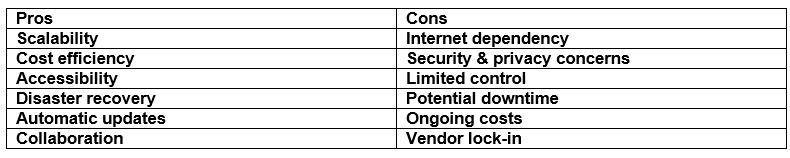
Key Takeaways: Trends in Hospitality Technology:
• AI-powered automation:AI is revolutionizing property management by streamlining operations, automating guest communications, optimizing pricing strategies, and providing real-time data-driven insights. AI can proactively detect service issues (e.g., late check-ins or housekeeping delays) and trigger automated workflows to resolve them, improving efficiency and guest satisfaction.
• IoT integration: IoT enables smart room controls, contactless check-in, facial recognition, and sensor-driven housekeeping automation. For example, motion or door sensors notify the Property Management System (PMS) when rooms are vacant, allowing housekeeping tasks to be dynamically assigned based on real-time occupancy rather than static schedules.
• Hyper-Personalized Guest Experiences: AI now enables us to tailor every detail of a guest’s stay far beyond what traditional Property Management Systems (PMS) like Maxial or Opera could offer. From personalized room settings and smart amenities to curated local experiences and dining recommendations, this level of customization drives deeper guest satisfaction and loyalty.
• Seamless Automation: Routine tasks such as check-ins, check-outs, and housekeeping schedules are increasingly automated by AI-powered systems. This shift allows hospitality professionals to focus on what truly matters — delivering authentic human connections and memorable moments. Technology complements human touch rather than replacing it.
• Smart, Connected Environments: The integration of IoT devices transforms hotel rooms and facilities into intelligent spaces that adapt dynamically to guest preferences.
• Door locking system From climate control and lighting to entertainment and security, including digital keyless lock, these smart environments create unprecedented comfort and convenience.
• Data-Driven Revenue Management: Advanced AI analytics optimize pricing, inventory, and distribution channels in real-time, helping hotels maximize revenue while anticipating market demand and trends — a significant leap from the manual forecasting methods of the past.
• Enhanced Guest Support: AI-powered chatbots and robotics provide 24/7 assistance, answering guest queries instantly and supporting operational workflows. This not only boosts efficiency but also maintains a personal, responsive guest experience.
• Predictive Maintenance and Operational Efficiency: AI’s ability to predict equipment maintenance needs before failures occur reduces downtime and operational costs, ensuring smoother and more reliable hotel operations.
• Check-in kiosks in the hospitality industry: Faster contactless services are automated, user-friendly stations typically located in hotel lobbies that enable guests to check in, complete registration, and receive room keys without front desk staff assistance. They integrate with the hotel’s property management system (PMS) to verify booking details, process payments, and issue room access either via keys or mobile access, streamlining the entire check-in and sometimes check-out process. But there are legal implications of collecting guest data via kiosks. In summary, collecting guest data via kiosks carries significant legal responsibilities to ensure explicit consent, transparent data use, robust security, and compliance with evolving privacy laws. Failure to meet this obligations can result in fine, legal sanctions, and damage to the hotel’s reputation.
• Liability for Third-Party Vendors: If kiosks are provided or maintained by third-party vendors, hotels remain legally liable for ensuring these vendors comply with data protection laws and maintain adequate security, as breaches via vendor networks can also lead to penalties.
The main setbacks of deploying kiosks at hotels and resorts, based on current industry insights, include:
• Guest Preference for Mobile Solutions: Many guests prefer using their mobile devices as room keys and for check-in, as 60% of respondents in a 2024 study favored mobile wallets over kiosks. This trend can reduce kiosk usage and impact the return on investment for physical kiosks.
• Integration and Real-Time Updates: For kiosks to deliver a seamless experience (e.g., dynamic pricing, early check-in fees), they must integrate tightly with property management systems and housekeeping updates in real time. Failure to sync room status accurately can lead to guest dissatisfaction or operational inefficiencies.
• Security Concerns: Enhancing both physical and digital security is critical. Kiosks must comply with stringent data protection standards (such as PCI DSS 4.0) to safeguard guest information and payment data. Any security weaknesses could undermine guest trust and hotel reputation.
• User Experience Challenges: Kiosks need to be highly intuitive and accessible (multi-language support, ADA compliance) to encourage adoption by diverse guests. Complex or unfriendly interfaces can frustrate users and reduce kiosk effectiveness.
• Operational Costs and Maintenance: Physical kiosks require ongoing maintenance and may involve upfront capital expenditure. Hotels must balance these costs against labor savings and guest experience improvements.
• Labor and Staffing Dynamics: While kiosks reduce front desk workload, hotels still need staff to assist guests who face difficulties with kiosks or prefer human interaction, especially for complex requests or troubleshooting.
In summary, while big players for kiosks bring efficiency and contactless convenience, setbacks include competition from mobile key adoption, the need for robust system integration and security, user interface design challenges, and operational costs. Hotels must carefully address these factors to maximize kiosk benefits and guest satisfaction.
While we have covered kiosks, another important AI-driven trend is that predictive analytics are fundamentally transforming revenue management strategies in the hospitality industry by enabling a shift from reactive to proactive, data-driven decision-making. These advanced systems analyze vast and diverse datasets—including historical booking patterns, competitor pricing, local events, weather conditions, and guest behavior—in real time to forecast demand with unprecedented accuracy.
How AI-driven predictive analytics are reshaping and transforming revenue management strategies in hospitality include:
• Dynamic Pricing Optimization: AI continuously adjusts room rates based on predicted demand fluctuations, competitor pricing, and market trends. This ensures hotels maximize revenue during peak periods by raising prices and maintain occupancy during low demand by offering competitive rates, thus optimizing RevPAR (Revenue per Available Room).
• Accurate Demand Forecasting: Machine learning models predict future booking volumes and demand surges linked to events or seasonality. This allows hotels to proactively manage inventory, staffing, and pricing strategies, reducing the risk of overbooking or underutilization.
• Personalized Revenue Strategies: AI segments guests by behavior and preferences, enabling tailored offers and packages that increase conversion rates and ancillary revenue streams beyond room sales, such as spa or dining services.
• Integration and Automation: AI-powered Revenue Management Systems (RMS) integrate seamlessly with Property Management Systems (PMS), Central Reservation Systems (CRS), and Customer Relationship Management (CRM) platforms. This unified data ecosystem enhances decision-making and operational efficiency.
• Real-time Market Intelligence: AI monitors competitor pricing and market conditions continuously, allowing hotels to respond instantly to competitive moves and external factors, maintaining optimal positioning in the market.
The impact of these AI-driven strategies is measurable: hotels leveraging AI have reported revenue increases up to 17%, occupancy boosts of 10%, and operational efficiency gains of 25% when combining AI insights with human expertise. Moreover, AI enables revenue managers to focus more on strategic planning by automating repetitive pricing and forecasting tasks.
In summary, AI-driven predictive analytics empower hospitality businesses to optimize pricing, forecast demand accurately, personalize guest offers, and react swiftly to market changes, resulting in enhanced profitability and competitive advantage in an increasingly dynamic market environment.
Embracing Technology: A New Era for Hospitality
The hospitality industry’s embrace of AI, IoT, and other emerging technologies is accelerating rapidly. Hotels and resorts worldwide are investing in smart infrastructure, AI-driven platforms, and connected devices to stay competitive and meet evolving guest expectations. This digital transformation is enabling a new era of hospitality — one that is smarter, more.
Yet, amid all this technological advancement, the heart of hospitality remains unchanged - it’s about human connection, empathy, and creating memorable experiences that resonate.
"Digital Transformations sets the stage, but human touch steals the show"
Technology is a powerful enabler, but it's the people behind it who truly make hospitality exceptional.
About the Author: Jmaal Bawazir | Freelance Consultant | Cmd Alt Fix U.K. Connect with me on LinkedIn: https://www.linkedin.com/in/jmaalbawazir
© 2025 Cmd Alt Fix | All Rights Reserved
hidden
© 2026 | MMXXVI All Rights Reserved. | Cmd Alt Fix | United Kingdom | www.cmdaltfix.uk